
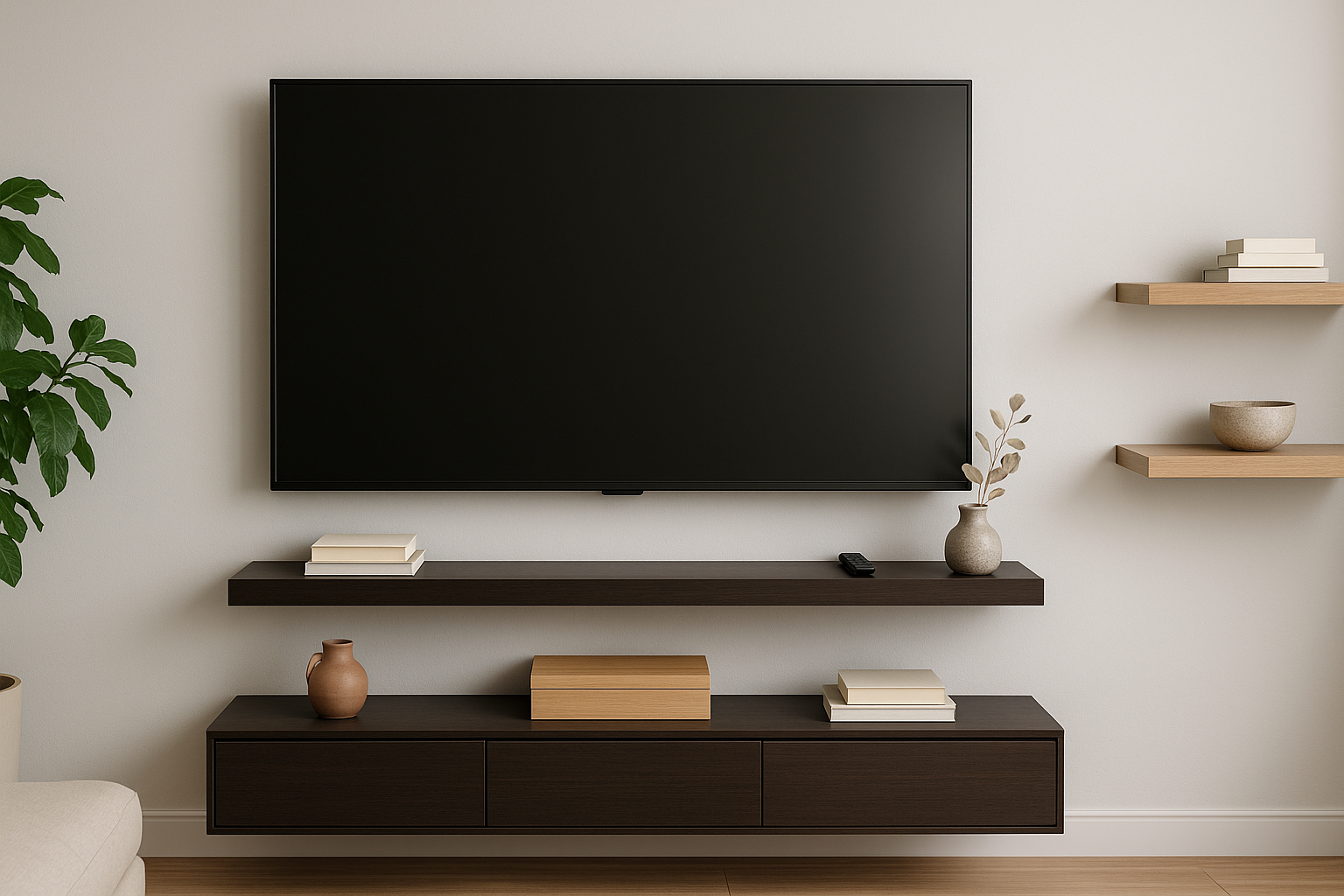
Finding the right way to hang your TV can feel a bit like choosing the right pair of shoes: style matters, comfort matters, and one misstep can ruin the whole look — or your back. You know what? A well-chosen TV mount and a few floating shelves will change more than the view: they can tidy cables, create cozy mood lines on the wall, and make your living room feel larger. For homeowners in Salt Lake City, that’s especially nice when you want a clean backdrop for mountain views, or when winter guests arrive and you need your space to feel both grown-up and welcoming.
Why mounting your TV actually makes your room feel bigger (yes, really)
Mounting a TV frees up floor space and creates visual breathing room. When the screen is up on the wall, the eye travels. It sees the furniture layout, the rug, the light from the windows — not a bulky cabinet. That’s not just theory; designers often suggest eliminating large media consoles to make rooms feel airier.
But there’s a catch: you can’t simply slap a mount on any wall. Different walls need different hardware. Drywall over studs, plaster, concrete, or brick each have their quirks. That’s why choosing the right mount and installer matters. Utah TV Mounting balances both the technical side (measuring VESA patterns, choosing the correct lag bolts) and the fun side (placement for the best viewing angle).
Types of mounts — which one fits your style?
There are three common styles, each with a personality.
Low-profile/Fixed Mounts: These hug the wall and look slick. Great if you want a minimalist, modern vibe. But they’re not flexible; you’ll need to position them carefully — think about glare from afternoon sun on a Wasatch afternoon.
Tilting Mounts: These give you a few degrees of vertical adjustment. Handy when you mount a TV higher than eye level, like above a fireplace — yes, it’s stylish and often necessary, though not ideal for very long viewing sessions.
Full-motion/Articulating Mounts: These are the workhorses. Swivel, extend, tuck away. They’re perfect for multi-use rooms where the TV needs to face different seating groups, or if you want to hide it sometimes.
Floating shelves: not just pretty, actually practical
Floating shelves are more than Instagram props. They hide soundbars, house streaming boxes, and display a plant that breathes life into the room. You can mix materials — reclaimed wood with black metal brackets (hidden, of course), or crisp white laminate for a bright, Utah-sunny look.
Here’s the thing: spacing matters. Put a shelf too close to the screen and heat builds up. Too far and the visual balance goes off. A good installer considers ventilation and accessibility for ports and cords. Also, if you’ve got kids or pets, choose sturdy brackets and anchor them to studs. Safety first; style second.
Planning the perfect setup — practical steps
Let me explain how we usually plan a job. It’s simple, but it’s not simplistic.
Measure the room and viewing distance: Generally, your viewing distance should be about 1.5 to 2.5 times the diagonal screen size. That’s the rule of thumb most manufacturers lean on.
Consider height: Eyes should naturally fall near the middle of the screen when seated. Above a fireplace is fine, but you may want a tilting mount to compensate for the extra height.
Manage cables: In-wall cable management systems look clean and follow code. We also provide external cable channels if you want a less invasive route — both have strengths.
Account for audio: Mounts don’t just hold screens. They set the stage for soundbars, speakers, or a discreet Sonos setup. Proper shelf positioning helps create a balanced sound field.
Installation realities — what pros handle, and why you might want them to
You could try DIY with a stud finder, level, and a YouTube how-to. Some folks get it right. Others end up with crooked mounts or worse: a TV on the floor. Here’s why professionals help.
Structural knowledge: Not all studs are equal. Older Salt Lake City homes sometimes have odd framing, plaster, or lath that need special care.
Right hardware: We use grade-appropriate lag bolts, toggles, or concrete anchors. That’s technical jargon for “we get it to stay up and stay safe.”
Cable routing and code: There are fire-safety rules for in-wall power and low-voltage cables. Pros keep your setup attractive and compliant.
You’d think a mount is just a mount. Yet proper mounting is about longevity and safety — and yes, about that satisfying, symmetrical look that makes you sit down and appreciate your room.
Design tips — small tweaks that make a big difference
Want your living room to feel intentional? Try these.
Symmetry with asymmetry: Place two floating shelves on one side and a tall plant on the other. It balances without being matchy-matchy.
Layer lighting: Backlight the TV with bias lighting to reduce eye strain. Add a small lamp near the shelves for warmth.
Texture matters: Mix materials — glass, wood, metal — for depth. A leather sofa, a woven rug, and a wooden shelf can make a simple setup feel curated.
Honest moment: sometimes less is more. But sometimes more is more. It depends on your taste, your lifestyle, and whether your teenager uses the space as a second bedroom.
Seasonal ideas and local touches — because Utah vibes matter
In Salt Lake City, seasons change fast. A mount-and-shelf setup that works in summer might need slight tweaks for winter gatherings. Think about where natural light hits in the afternoon. Consider a darker frame for contrast against pale winter walls. And if you love local makers, floating shelves from a Salt Lake woodworker add a personal touch that pairs well with landscape photos of the Wasatch Range.
Common questions — quick answers
Will mounting damage my wall? Minimal, if done right. Proper anchors and patching reduce visible impact. And a mounted TV often means fewer dents and scratches from moving consoles around.
Can I hide cables entirely? Yes, with in-wall kits or surface channels that match paint. Both work; one is a little cleaner, the other less invasive.
How long does installation take? Usually 1–3 hours for a standard job. Complex setups (multiple TVs, sound systems) take longer, but we’ll give you a clear timeline up front.
Ready to make the change? We’ll make it easy.
If you’re a homeowner in Salt Lake City and you want a living room that looks intentional and works for everyday life, Utah Tv Mounting can help. We handle everything from selecting the right mount to neat cable management and sturdy, level installation. You get a cozy, cleaner space — plus peace of mind.
Call us at 801-383-0493 or click to Request a Free Quote. Let’s talk about what will look best on your wall, what fits your budget, and when we can come by. You’ll get clear advice, a fair price, and a tidy result. Simple. Smart. Salt Lake City-ready.


